 Saferoamer
The study abroad visas guide for African students has been updated to accommodate the new year’s new policies as well as requirements. If you are an African student who has the passion to study abroad, then this article is for you.
Securing a university acceptance letter from a dream international school is a massive milestone for any scholar. However, for scholars departing from continental hubs like Nigeria, Ghana, Kenya, or South Africa, the absolute hardest hurdle is navigating the immigration gates. Recent global policy tightening across major western nations means applications face intense baseline scrutiny.
If you are a prospective scholar preparing your file, mastering the technicalities of study abroad visas for African students is critical to avoiding an automatic rejection. Below is an extensive, data-verified blueprint mapping out the current financial thresholds, course-matching strategies, and documentation standards required to secure your student passport stamp.
Navigating the 2026 Global Student Visa Changes
Over the past two years, primary student destinations have aggressively reshaped their international intake frameworks. Governments are actively cracking down on what they term “migration vehicles,” prioritizing pure academic merit and labor market alignment over student volume.
The United Kingdom: The Home Office enforces strict limitations on bringing dependents, and student visa fees have risen.
Canada: The IRCC has capped international student intake volumes. However, as a major policy update, international students in Canada no longer need a separate co-op work permit for mandatory internships up to 50% of their program duration.
The United States: Embassies are enforcing deeper “Non-Immigrant Intent” checks. Consular officers are scrutinizing whether applicants from high-emigration regions plan to return home after their degree.
The Universal Proof of Funds Barrier for Study Abroad for African Students
The single most common reason study abroad visas for African students get denied is insufficient or suspicious financial documentation. Visas are systematically rejected if an immigration officer suspects a bank account has been artificially “padded” with a one-time unexplainable deposit.
Current Living Expense Proof Thresholds (Excluding Tuition Fees)
Canada: Applicants must show proof of first-year tuition plus a baseline living expense fund.
United States: You must demonstrate immediate liquid funding for your first year of study (matching the exact amount printed on your official I-20 document).
Compliance Standards for Financial Proof
Stable History: Bank statements must cover 4 to 6 consecutive months, detailing clear, organic transaction histories.
Sponsor Cleanliness: If you are using a third-party sponsor (e.g., an uncle or corporate entity), you must provide a detailed letter of sponsorship, employment verification, and clear proof of affinity to explain why they are paying for your education. Self-employed sponsors must back statements with business registration papers.
Passing the “Academic Progression” Test
Embassies use specialized framework logic to filter out applicants using education as a disguised entry ticket to work abroad. Your intended international course must align logically with your previous educational background or professional working experience.
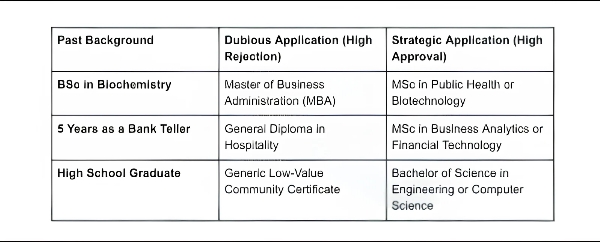
If you are completely switching fields, your Statement of Purpose (SOP) must build a logical bridge explaining how the career pivot connects directly to your long-term economic plans in your home country.
The Statement of Purpose (SOP) Framework
For paper-based application streams (like Canada’s IRCC portal), your Statement of Purpose is your primary voice. It should read like an economic case study, not a plea for an international life.
The Formula: Clearly outline why you chose the specific institution, why you cannot study this exact program in your home country, what specific technical skills you will acquire, and crucially which local domestic industries or firms you plan to target upon your return home.
Home Ties Documentation: Supplement your SOP by compiling verifiable evidence of ties to your home country. This includes property deeds, employment leave letters, or family records proving you have structural roots that require your return.
Master the In-Person Interview Protocol
For destinations requiring live consular screening (such as the United States), the face-to-face interview is where the visa is won or lost.
Avoid Scripted Answers: Consular officers hear memorized templates thousands of times. Speak conversationally and confidently about your program.
Lead With Financing Immediately: If asked, “Who is paying for your degree?”, do not just say “My father.” Say, “My father is fully funding my study through his corporate logistics enterprise, which generates [X amount] annually, as shown in my financial documents.”
Own Your Curriculum: You must be able to describe specific modules or research tracks within your university program without looking at a piece of paper. If you cannot explain what you are going to study, the officer assumes you are not a genuine student.
Conclusion
Securing a study abroad visa across Africa requires moving away from casual assumptions and adopting meticulous, high-level administrative accuracy. By aligning your academic path with verifiable career value, securing transparent multi-month financial streams, and clearly defining your home ties, you can comfortably clear the embassy gates.
Which country’s student visa process are you currently preparing for? Let us know your primary challenges in the comments section below!


 Saferoamer