 Saferoamer
The landscape for international students in Canada has undergone a massive transformation. Immigration, Refugees and Citizenship Canada (IRCC) has tightened the rules once again to balance the temporary resident population with local housing and infrastructure. If you are a prospective student mapping out your journey, understanding the canada study permit caps 2026 framework is non-negotiable.
Navigating the new provincial spaces, strict attestation letter requirements, and specialized exemptions is the only way to successfully submit an application that won’t get rejected at the gate. Below is an extensive, data-driven breakdown of the open provincial slots and cap allocations you need to know this year.
The Mastyer Numbers: 2026 National Cap Overview
For 2026, Canada is enforcing a total cap of 408,000 study permits across the country. However, this figure is divided into two very different categories: new incoming arrivals and existing students.
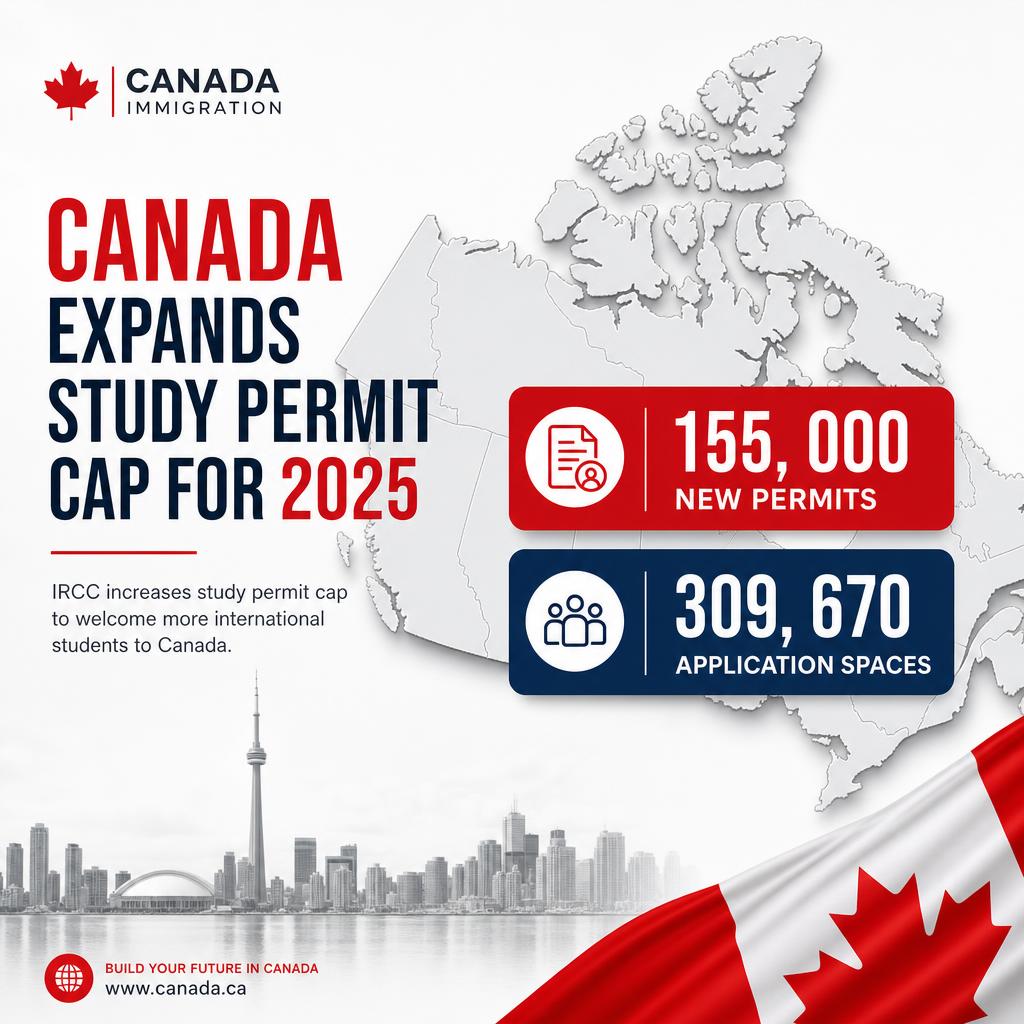
- New Arrivals Target: 155,000 permits allocated for freshly arriving international students.
- Extensions Target: 253,000 permits reserved for students already in Canada changing their programs or extending their stay.
- Total PAL/TAL Application Spaces: 309,670 spaces are open for processing. This is the maximum number of applications IRCC will accept to reach their target approval numbers, factoring in standard student visa refusal rates.
Breakdown of Canada Study Permit Caps 2026 By Province
If your program requires a Provincial Attestation Letter (PAL) or Territorial Attestation Letter (TAL), your application is directly tied to a provincial quota. Once a province exhausts its allocated slots, its schools cannot issue more attestation letters for the remainder of the calendar year.
The application spaces are distributed roughly by provincial population size:
| Province / Territory | Maximum 2026 PAL/TAL Application Spaces | Expected Permit Approvals |
| Ontario | 104,780 | 70,074 |
| Quebec | 93,069 | 39,474 |
| British Columbia | 32,596 | 24,786 |
| Alberta | 32,271 | 21,582 |
| Saskatchewan | 11,349 | 5,436 |
| Manitoba | 11,196 | 6,534 |
| Nova Scotia | 8,480 | 4,680 |
| New Brunswick | 8,004 | 3,726 |
| Newfoundland & Labrador | 5,507 | 2,358 |
| Prince Edward Island | 1,376 | 774 |
| Northwest Territories | 785 | 198 |
| Yukon | 257 | 198 |
Data Source: Official Immigration, Refugees and Citizenship Canada (IRCC) Allocations Framework.
The Big Shift: Who is Exempt from the 2026 Cap?
The most critical update for this year is a massive pivot towards high-value academic talent. While undergraduate and college programs face aggressive limits, advanced academics are experiencing a smoother pathway.
Graduate-Level Master’s and PhD Exemption
As of January 1st, 2026, Master’s and doctoral degree students enrolling at public Designated Learning Institutions (DLIs) are completely exempt from the PAL/TAL requirement. Their applications sit completely outside the 155,000 new arrival cap. Furthermore, PhD applicants now benefit from a prioritized 14-day processing window.
Other Major PAL-Exempt Cohorts
- Primary and secondary school students (Kindergarten to Grade 12).
- Existing study permit holders applying for extensions from within Canada.
- Exchange students and specific government priority or vulnerable cohorts.
The 2026 Financial Bar: Updated Proof of Funds
Understanding the provincial slots is only half the battle. Your application will be rejected regardless of slot availability if you do not hit the updated financial thresholds.
Outside of Quebec, a single applicant must prove they have access to at least CA$22,895 in living funds. This must be shown in addition to your first-year tuition fees and travel costs.
Strategy for International Students: How to Secure a Slot
Because spaces can run out quickly—especially in highly competitive regions like Ontario and British Columbia—you need a proactive strategy:
- Apply to Atlantic Canada: Provinces like Nova Scotia and New Brunswick have received proportionally higher allocations relative to their current application loads, making them excellent “safe zones”.
- Target the PGWP Program List: If you are applying for a college or diploma track, make sure your program is one of the 1,107 specific fields (such as STEM, healthcare, or trades) eligible for a Post-Graduation Work Permit (PGWP).
- Submit Early in the Cap Year: A PAL is only valid until December 31st of the year it was issued. Secure your school acceptance letter early so your provincial slot can be locked in before quotas max out.
Conclusion
The golden era of unstructured student immigration to Canada has closed, replaced by a highly regulated, merit-based, and strategically balanced system. By aligning your studies with exempt graduate fields or applying early to underutilized provincial pools, you can still turn your Canadian study goals into a reality.
Are you applying for an undergraduate or graduate program this year? Share your target province in the comments below!
