 Saferoamer
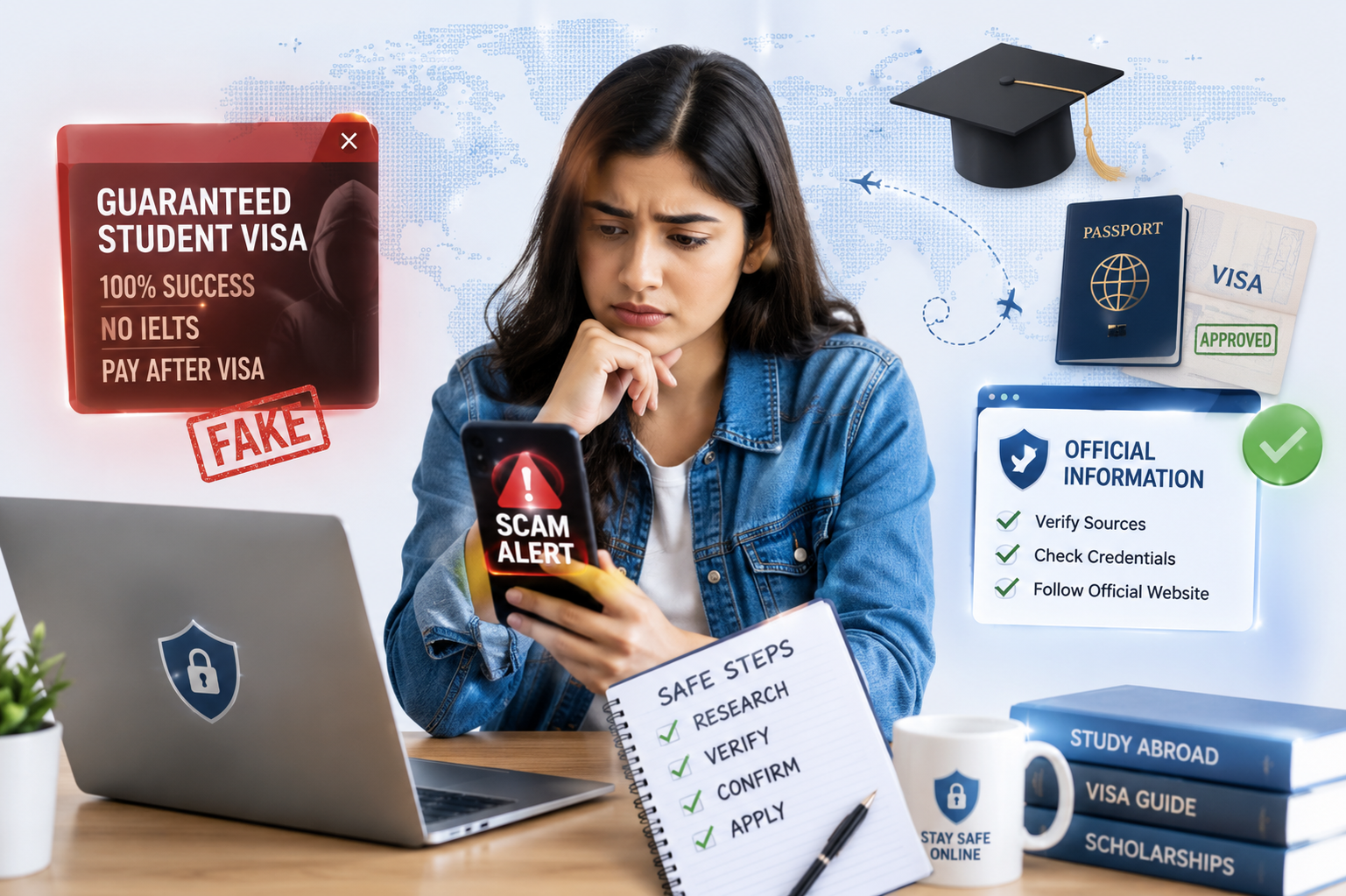
Have you heard of student visa scams? Do you know it’s real? This blog article will teach you to know how to avoid student visa scams online. International student intake caps and stricter visa rules have made getting approved tougher than ever.
Unfortunately, cybercriminals and fraudulent agencies are capitalizing on student anxiety by creating sophisticated online scams. Losing your life savings or getting barred from entering your dream country is a devastating reality for thousands of victims each year. This research guide exposes common fraud tactics and explains how to verify credentials safely.
How to Avoid Student Visa Scams Online
1. The “Guaranteed Visa” Red Flag
The most common online scam tactic is promising a 100% guaranteed student visa approval in exchange for an upfront payment. And, legally, no agency, consultant, or lawyer can guarantee a visa approval. Only official immigration officers working for the destination country’s government have the legal authority to grant or refuse a visa. So, if an online agent pressures you to pay quickly because they claim to have an “inside connection” at an embassy, block them immediately.
2. Fake University Admission Portals
Scammers frequently build highly professional websites that replicate the exact branding, logos, and layouts of prestigious global universities. Then, they send spam emails claiming you have won a scholarship or been accepted into a program. They then direct you to a fake portal to pay an urgent “admission fee” or “SEVIS registration deposit.”
However, to verify the authenticity of those sites, you have to look closely at the website URL. Official academic institutions in the US, use
.edu extensions, while UK universities use .ac.uk. Scammers often use .com, .net, or subtle misspellings of the school’s actual name.3. Phishing Emails Impersonating Immigration Officials
Fraudsters send realistic emails pretending to be from official government departments, such as the UK Home Office, Canada’s IRCC, or Australia’s Department of Home Affairs. The email will claim there is a critical error in your visa application. Sometimes, they threaten immediate deportation or application cancellation unless you transfer a “fine” or “verification fee” via untraceable methods like cryptocurrency, gift cards, or wire transfers. Government immigration departments will never request money over email, nor will they accept payment via commercial wiring services. All official fees are paid securely inside your logged-in immigration portal.
4. The “Document Forgery” Trap
Some dishonest local agents suggest creating fake bank statements or employment certificates to help you bypass strict proof-of-funds rules.
The Extreme Risk in this is that while the agent might frame this as a “standard shortcut,” immigration departments can use digital verification networks linked directly to global banks.
The Consequence: If you submit a forged document, you face an automatic visa refusal, an immediate ban from entering that country for up to 10 years, and a permanent criminal record for fraud.
5. How to Check Agent Credentials Safely
You can completely avoid online consultation scams by verifying your agent through official government regulatory directories before sharing any documents.
For Canada: Ensure the representative is registered with the College of Immigration and Citizenship Consultants (CICC).
For Australia: Verify that they are a registered Migration Agent (MARA) or an authorized education counselor.
For the UK: Check if they are regulated by the Office of the Immigration Services Commissioner (OISC).
Conclusion
Protecting yourself from online visa scams requires patience and independent research. Never let urgency cloud your judgment, avoid shortcuts that involve fake documents, and always double-check URLs against official government portals before making payments.

 Saferoamer