The Canada study permit caps 2026 have officially reshaped how international students apply for study visas. Things are tighter than they used to be, and the era of relatively open access to Canadian student visas is behind us, at least for now.
However, tighter does not mean impossible. It simply means you need a smarter strategy. Not every province faces the same level of congestion, not every programme carries the same restrictions, and not every applicant feels the same impact from the new rules.
This guide walks you through exactly what the 2026 cap looks like. Additionally, it shows which provinces have more breathing room and helps you give your application the strongest possible shot in the current environment. Let us start with the big picture.
What the Canada Study Permit Caps 2026 Mean
The federal government, through Immigration, Refugees and Citizenship Canada (IRCC), has confirmed the national targets for 2026.
The Key Numbers Behind the 2026 Cap
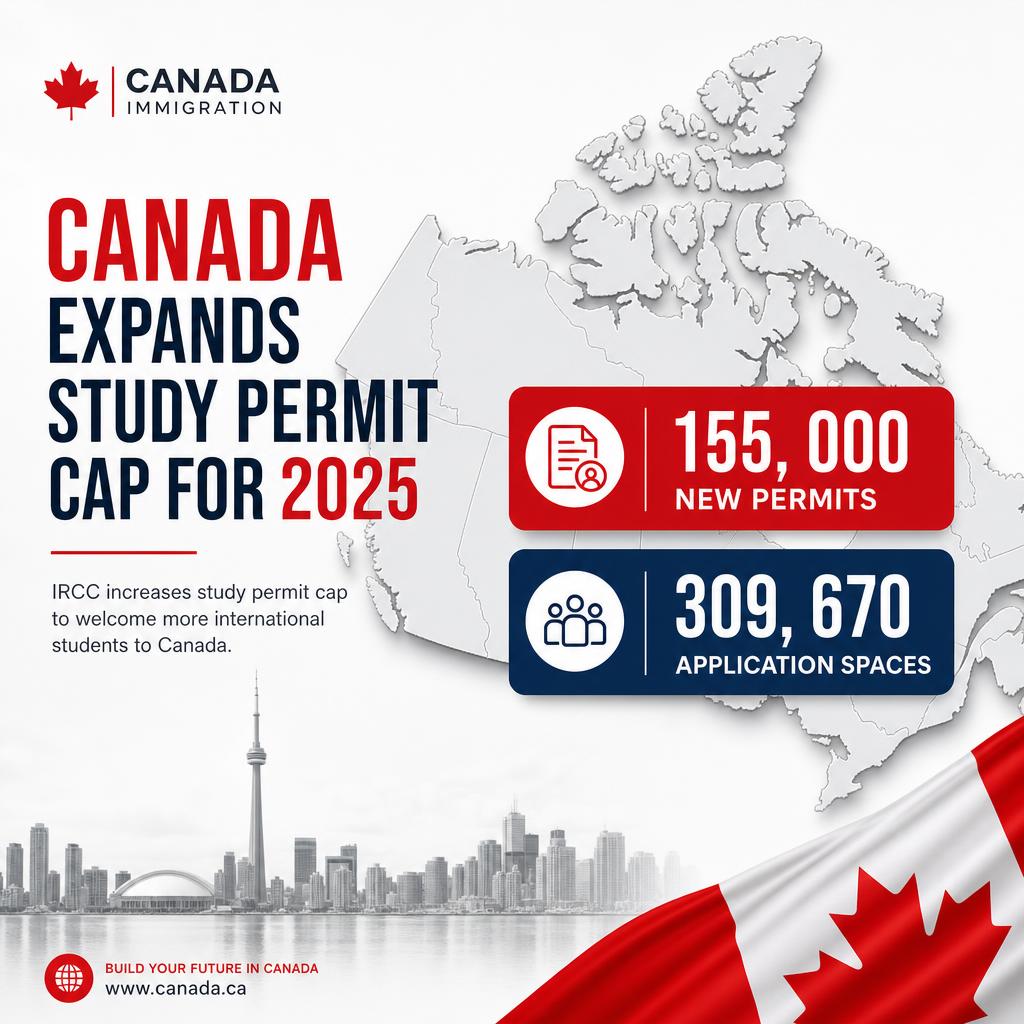
Canada will issue up to 408,000 study permits in 2026. This total includes 155,000 permits for newly arriving international students and 253,000 extensions for students already in Canada who are renewing or continuing their studies.
This target sits 7% below the 2025 ceiling and falls 16% below the 2024 figure. As a result, new international student admissions are projected to drop by nearly 50% compared to 2024 levels. That is a significant reduction by any measure.
Why Canada Introduced the Cap
Canada wants to reduce its temporary resident population to below 5% of the national total by the end of 2027. International students make up a major portion of that temporary resident count. Therefore, the cap serves as the government’s primary tool for achieving that population goal.
What the Provincial Attestation Letter (PAL) Does
The key mechanism managing all of this is the Provincial Attestation Letter, or PAL. Most undergraduate and college-level applicants need a PAL before IRCC will even process their study permit application.
Each province receives a fixed number of these letters and distributes them to its designated learning institutions. Once those spaces run out, new applications from that province effectively stop. Consequently, your choice of province now matters more than ever under the Canada study permit caps 2026.
The PAL System: Understanding Canada Study Permit Caps 2026 From the Inside
Before looking at specific provinces, it helps to understand how the PAL system actually operates.
How Application Spaces Are Distributed
IRCC has made 309,670 study permit application spaces available under the cap for 2026. This figure represents the maximum number of applications it will accept from PAL-required students for the entire calendar year. Each province receives its share and then distributes those spaces to its designated learning institutions.
Why There Are More Spaces Than Expected Permits
The application space number is higher than the expected permit issuance figure because not every application receives approval. Historically, refusal rates run between 40 and 50%, so IRCC intentionally allocates more application spaces than expected permits to account for that gap.
What This Means for Your Application
The competition is real, the spaces are finite, and timing matters enormously. Moreover, high-demand provinces like Ontario and British Columbia could see some schools close their intakes early if their 2026 allocation spaces fill up quickly. Applying late is therefore a genuine risk under this framework.
The Graduate Student Exemption
There is one major exemption worth knowing upfront. From January 1, 2026, master’s and doctoral students enrolled at a public designated learning institution no longer need to submit a PAL with their application. In other words, graduate students sit entirely outside the cap. We return to this point in detail further below.
Ontario and British Columbia: Big Numbers, Bigger Competition Under Canada Study Permit Caps 2026
Ontario and British Columbia are the first places most people think of when considering a Canadian education. Toronto and Vancouver host many of the country’s best-known universities and colleges. Under the Canada study permit caps 2026, however, these are also the most congested destinations for new applicants.
Ontario’s Allocation Under the 2026 Cap
Ontario receives the largest share of PAL-required seats, coming to 70,074 expected permits and 104,780 application spaces. These are still large numbers, but the demand is enormous.
Ontario historically admitted a disproportionate share of all international students. Now, however, it faces restricted growth under the 2026 framework. The gap between available spaces and total demand consequently remains wide.
British Columbia’s Position in the 2026 Cap
British Columbia follows Ontario, receiving 24,786 expected permits for PAL-required students. Similarly to Ontario, BC historically attracted far more applicants than any restricted pool can easily accommodate.
What This Means Practically for Applicants
For college diploma and undergraduate programmes in Ontario and BC, you face a large pool of competitors fighting for a limited number of spaces. Furthermore, PALs can run out early in the year, institutions with weaker compliance records may receive fewer spots, and refusal rates in high-demand areas are likely to stay elevated.
You can still apply for Ontario or BC. Nevertheless, apply early, choose a well-established public institution, and make your application airtight from the very start.
Quebec and the Canada Study Permit Caps 2026 Framework
Quebec occupies a unique position within Canadian immigration overall, and that distinction extends directly to the study permit landscape.
Quebec’s 2026 Allocation
Quebec received an allocation of 39,474 expected permits for PAL-required students in 2026, making it the second-largest allocation after Ontario.
Quebec’s Added Layer of Complexity
Quebec runs its own immigration system with distinct requirements. As a result, students must meet Quebec-specific conditions on top of the federal process. French-language programmes at Quebec institutions tend to carry better approval rates, and dedicated pathways exist for students who study in French and plan to remain in the province after graduation.
The Financial Case for Studying in Quebec
For students comfortable in a French or bilingual environment, Quebec remains a genuinely strong option. For instance, a student in Montreal typically spends around CAD 25,000 per year on tuition and living expenses, whereas a comparable lifestyle in Toronto runs roughly CAD 45,000. That difference is substantial over a multi-year degree.
The trade-off, however, is the added administrative layer. You need to account for provincial requirements alongside the federal process and confirm that your chosen institution holds approval under both systems before applying.
Saskatchewan: Underrated Provinces Within Canada Study Permit Caps 2026
These two Prairie provinces rarely top the list when students think about studying in Canada. Fortunately, that oversight works in your favour.
Why Alberta Deserves More Attention
Alberta is home to the University of Alberta and the University of Calgary, both of which carry solid academic reputations, particularly in engineering, energy technology, business, and health sciences. Alberta received a meaningful allocation of application spaces under the 2026 cap. Moreover, approval rates have risen steadily here due to strong demand for skilled professionals in energy, agriculture, and tech.
Saskatchewan’s Appeal for International Students
Saskatchewan actively recruits international students and offers immigration pathways specifically designed to help graduates stay and work after completing their degrees. Both the University of Saskatchewan and the University of Regina are well-regarded designated learning institutions with strong approval track records.
What the Prairies Offer That Larger Provinces Do Not
Both provinces offer lower living costs than Ontario and BC. Additionally, application pools at most Prairie institutions are far less crowded, and the regional job market genuinely needs skilled workers across several growing sectors. For students open to locations beyond the major coastal cities, Alberta and Saskatchewan therefore deserve serious consideration under the current cap framework.
Atlantic Canada: The Most Accessible Region Under Canada Study Permit Caps 2026
If any region genuinely earns the label “student-friendly” under the current study permit landscape, it is Atlantic Canada. Nova Scotia, New Brunswick, Prince Edward Island, and Newfoundland and Labrador have each been positioned as more accessible options under the Canada study permit caps 2026 system.
Why Atlantic Canada Got Proportionally Higher Allocations
Institutions in Atlantic Canada won proportionally higher allocations relative to their size. Federal policy deliberately gave this region room to grow its international student intake while larger provinces faced tighter restrictions. This reflects both national immigration strategy and the region’s genuine need for skilled workers and population growth.
The Atlantic Immigration Program Advantage
The Atlantic Immigration Program adds a significant long-term benefit to this opportunity. Specifically, graduates from Atlantic institutions who secure a job offer from a designated employer in the region can access a streamlined pathway to permanent residency. For international students thinking beyond their degree, this is a major advantage that provinces like Ontario simply cannot match through comparable dedicated programmes.
Living and Studying in Atlantic Canada
New Brunswick and Nova Scotia offer moderate tuition alongside notably lower living costs. Furthermore, approval rates for study permits in this region tend to run higher than in more saturated provinces. The application process is less congested, and post-graduation pathways are more clearly defined.
For students who prioritise a smoother application process, less competition for PAL spaces, affordable living, and a realistic route to permanent residency, Atlantic Canada is consequently worth exploring seriously in 2026.
Who Is Exempt from Canada Study Permit Caps 2026?
The exemption question matters enormously for certain applicants because it changes the equation entirely.
Graduate Students Are Outside the Cap
The cap does not apply to master’s and doctoral degree students at public designated learning institutions. Similarly, it excludes primary and secondary school students. Current permit holders who extend their status at the same institution and level of study are exempt as well. Certain government priority groups and vulnerable cohorts also fall outside the cap.
What the Graduate Exemption Means in Practice
Master’s applicants at public research-based institutions face no PAL requirement. Instead, they compete entirely on the merits of their application without pressure from a shrinking pool of attestation letter spaces.
This is a real and meaningful advantage in the current environment. If a graduate pathway is viable for you, the Canada study permit caps 2026 effectively do not apply to your application. That is therefore worth building your entire strategy around.
How to Navigate Canada Study Permit Caps 2026: Practical Steps
Understanding the cap structure is only useful if you act on it. Here is how to approach the current system practically.
Apply as Early as Possible
Provincial allocations operate on a first-come, first-served basis. Once they are gone, IRCC stops accepting new applications from that province for the year. As a result, mid-year applications in high-demand provinces carry a real risk of missing the window entirely.
Choose Your Institution Carefully
Designated learning institutions with strong compliance records hold their allocation spaces more reliably. By contrast, institutions with historically low approval rates or limited on-campus housing often receive tighter restrictions. A well-established public university with a proven track record is therefore a safer foundation than a newer or less regulated institution.
Show Stronger Financial Proof
IRCC expects applicants to demonstrate financial proof of approximately CAD 22,895 for living expenses, in addition to tuition fees. Applications that show only the bare minimum face higher refusal risks. Consequently, showing a healthy financial buffer above the minimum threshold strengthens your case meaningfully.
Target Less Saturated Provinces
Students applying to Atlantic provinces or Prairie regions often find more available spaces and a less congested application process. Overall, the experience of applying through these regions tends to be more straightforward under the current caps.
Keep Your Documentation Honest and Complete
IRCC officers look for genuine students with clear intentions, sufficient funds, and strong ties to their home country or realistic settlement plans. Inconsistencies in your file raise red flags, undisclosed previous refusals create problems, and vague study plans invite scrutiny. Therefore, every document in your application should be clear, honest, and complete.
What Comes Next After Canada Study Permit Caps 2026?
Many students want to know whether the cap situation will ease in future years. The short answer is: not immediately.
IRCC Has Not Committed to Higher Numbers
IRCC has not signalled any plan to increase permit numbers in the near term. The government intends to meet its 2027 temporary population target first. Furthermore, any future growth in study permits depends on policy changes and the success of broader reforms to the International Student Programme.
The Graduate Pathway Remains the Clearest Route
For those who qualify, the graduate pathway offers the least friction under the current system. For everyone else, a strong, well-documented application submitted early offers the best realistic chance of success.
Canada Is Being More Selective, Not Closing Its Doors
Canada is not shutting out international students. Rather, it is being more deliberate about who it admits, where they study, and at what level. That shift consequently creates real opportunities for serious, well-prepared, and strategic applicants who understand how the system now works.
Final Thoughts: Opportunity Still Exists Within Canada Study Permit Caps 2026
The Canada study permit caps 2026 have tightened the landscape considerably, particularly at the undergraduate and college level. Nevertheless, the opportunity is still there for applicants who approach it with the right strategy.
Graduate-level applicants at public institutions are in the strongest position the current system offers. Meanwhile, undergraduate and college applicants should apply early, target provinces with more available space, and build the strongest possible application from the ground up.
Success under this framework does not always go to the most impressive credentials. Instead, it goes to the applicants who understand how the system works and plan accordingly.
Take time to research provincial allocations at your target institutions. Additionally, speak to an authorised immigration consultant if you need guidance, and do not leave your application to the last minute. Under Canada study permit caps 2026, timing and preparation are genuinely everything.
You may also want to read our related guides on the [UK Graduate Route: The 18-Month Rule Explained], [Nordic English Programs for STEM Students], [Studying in Japan 2026: The 10-Year Residency Guide], and [Should You Study an Artificial Intelligence Degree in 2026?] for a complete picture of your global study options this year.
Other Resources:
– IRCC official study permit information
– Designated Learning Institutions list
– Provincial Attestation Letter Guidance
Always verify provincial allocations and permit numbers directly before applying. Figures are subject to change without notice.